Quantum Error Correction Research
An interdisciplinary research project investigating quantum error correction through computer science, engineering, and physics.
An interdisciplinary research project investigating quantum error correction through computer science, engineering, and physics.
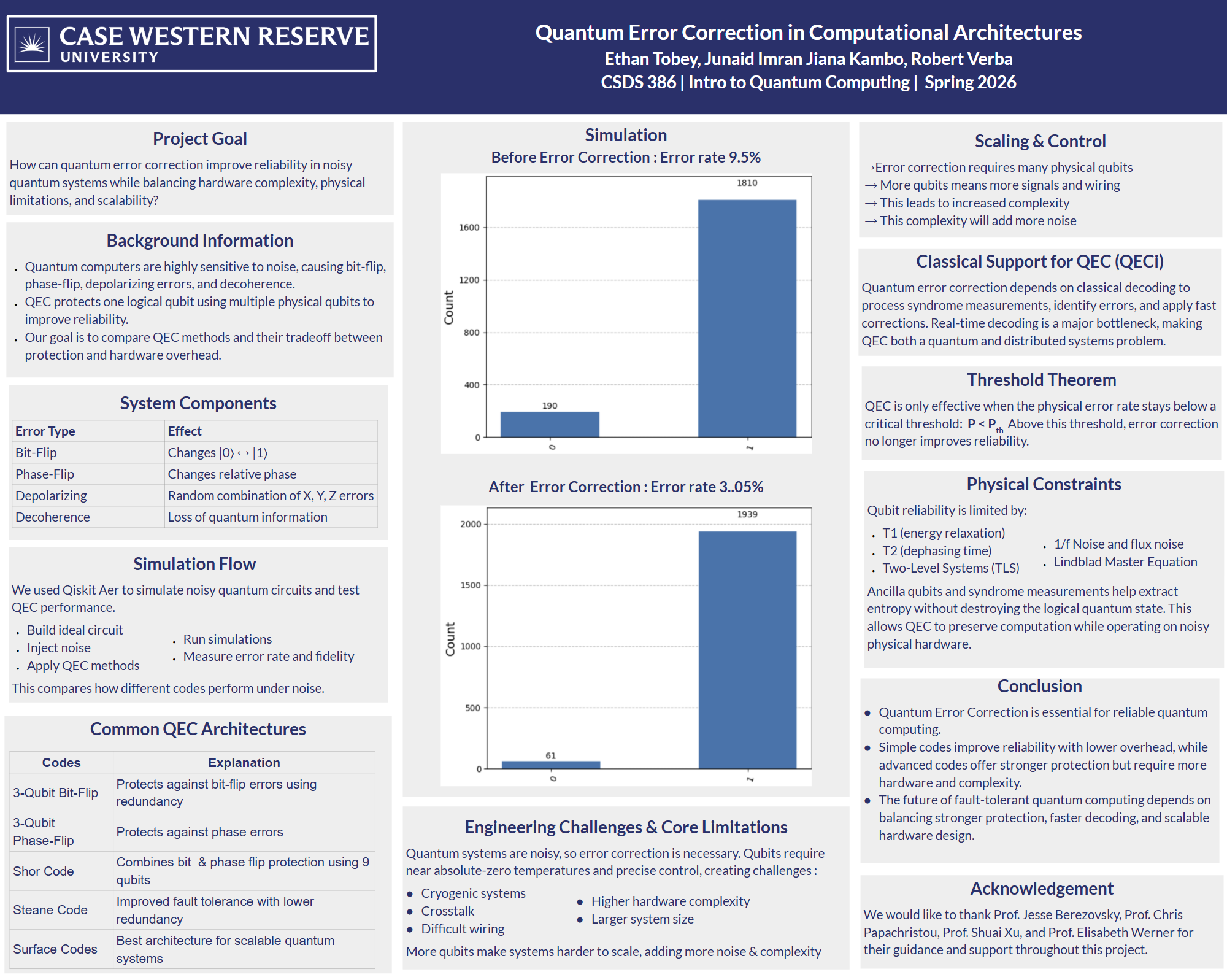
This research project explored the challenges of quantum error correction from multiple perspectives, combining computer science, engineering, and physics research. The project examined common quantum error correction architectures, including the 3-qubit bit-flip code, Shor Code, Steane Code, and surface codes, as well as the threshold theorem and the role of classical systems in supporting quantum error correction. The team also investigated quantum error simulation using Qiskit and IBM quantum computers to evaluate the effectiveness of error correction techniques.
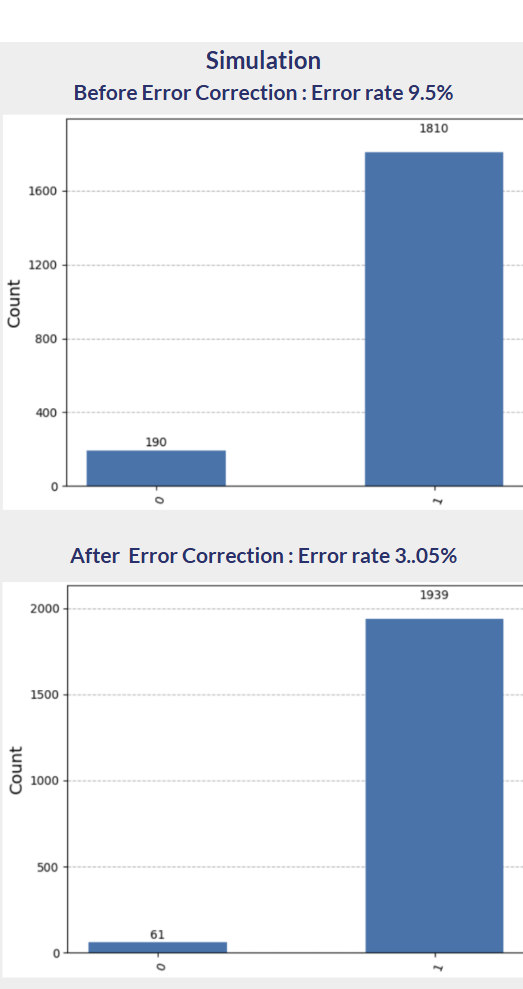
Using Python and Qiskit, our team simulated a 3-qubit bit-flip error correction code and compared its performance against a noisy system without error correction. Under a simulated 10% error rate, the error-corrected system reduced the sampled error rate to approximately 3%. This demonstrated how quantum error correction can improve reliability by encoding information across multiple qubits and detecting and correcting certain types of errors.
I was responsible for the computer science portion of the research, investigating quantum error types, Qiskit simulation, common QEC architectures, the threshold theorem, and classical support for quantum error correction. I also collaborated on the simulation component, writing Python and Qiskit code to implement and evaluate the 3-qubit bit-flip code. In addition, I helped organize the team's research and coordinate project development.